

A guilt-free guide to samples, line-jumpers, rereads, and all those books waiting patiently on your device
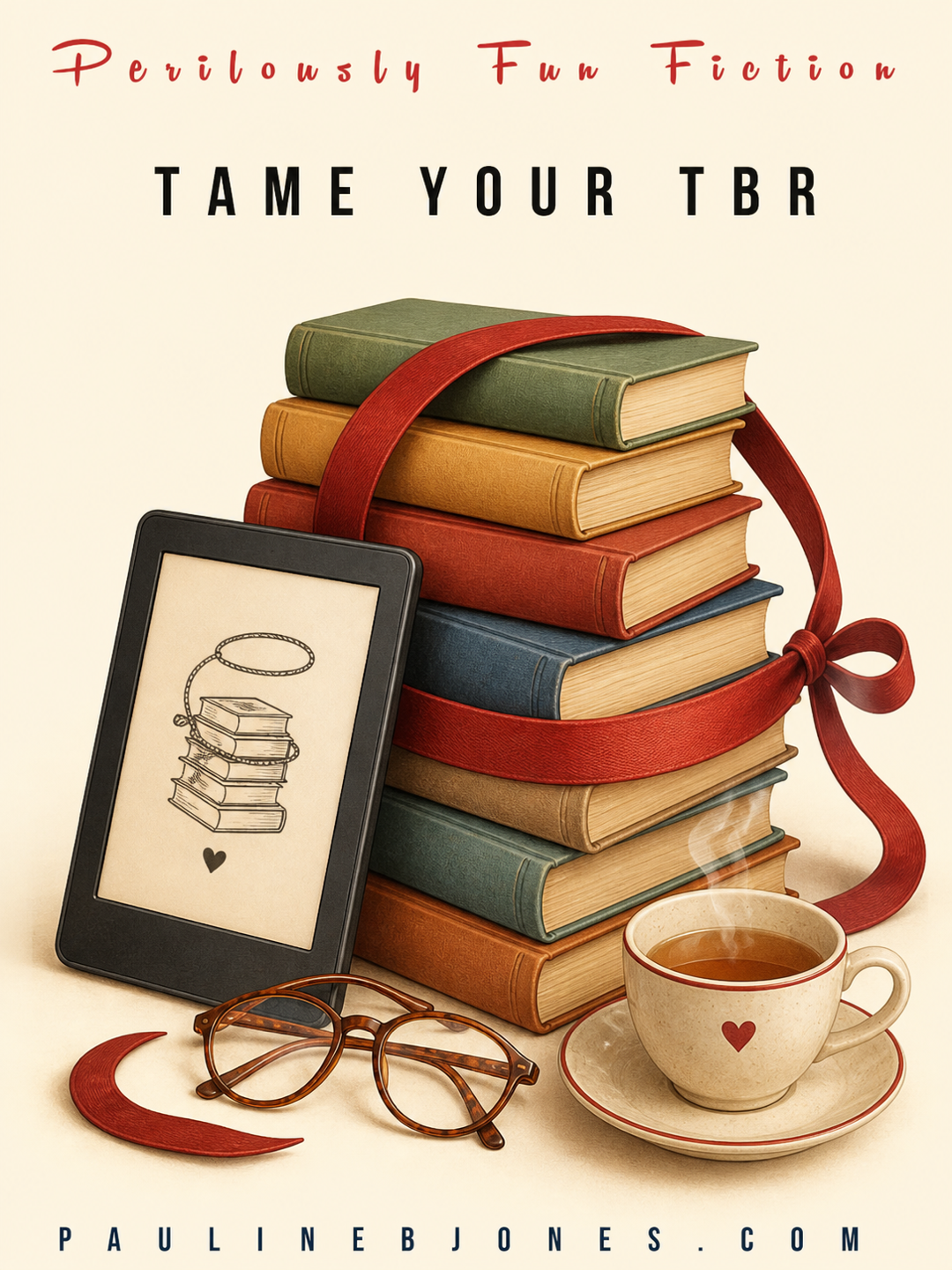
My To Be Read pile is no longer technically a pile. It lives on my tablet, where it cannot topple over and injure anyone.
This is progress.
Unfortunately, removing the structural danger did not make the TBR itself any smaller. I’ve been reading a lot lately—totally **not** because I’m hiding from real life in fiction—and I have made a sincere effort to reduce the number of unread books on my device.
There have been a few setbacks.
Apparently, trying to read down your TBR can lead to accidental book purchases. It’s not my fault I have a trigger one-click finger.
Really.
The strange thing about a TBR is that it starts as a collection of possibilities and can slowly become a list of obligations. Those books were supposed to delight us. Then one day we look at them and hear a tiny imaginary voice asking why we haven’t made more progress.
That is dangerously close to homework.
Reading is one of the great pleasures of my life, so I’ve been thinking about gentler ways to tame a TBR—without organizing all the fun out of it.
Stop treating your TBR like a checkout line
Books do not have to be read in the order they arrived.
When a favorite author releases a new book, everything else on my TBR goes to the back of the line. I burn through the new arrival, then feel sorry for myself because it is over. This is not an efficient system, but it makes me happy.
Your TBR is not a promise that each book will receive its turn in strict numerical order. It is closer to a private library. Some books are waiting for next week. Some are waiting for a rainy afternoon. Some are waiting for the mysterious future moment when you suddenly need exactly that story.
Let the line-jumpers jump.
Choose a small “read next” group
Looking at an entire TBR can be overwhelming—especially if yours has reached a size normally associated with municipal libraries.
Instead of trying to choose from everything, pull out a small group of possibilities. Five is a friendly number. Include a few different flavors: perhaps something funny, something adventurous, a mystery, an old favorite, and the book you keep meaning to begin.
This is not a binding contract. It is simply a smaller menu.
When none of those five appeals, change the menu. No paperwork is required.
Let samples audition for a place
Samples are useful when my one-click finger and my better judgment are not on speaking terms. They let a book wait on my tablet without immediately becoming another purchase.
Think of a sample as an audition, not an obligation. When you are ready for something new, read a few pages. If the story grabs you, wonderful. If it doesn’t, you have learned something useful before adding another full book to the collection.
And if a sample has been waiting for years without tempting you? It may be ready to leave the audition room.
Make peace with mood reading
I am very much an “in the right mood” reader. I can own an absolutely wonderful book and still not begin it because I don’t want to meet it in the wrong frame of mind.
That does not mean the book was a bad choice. It may simply be waiting for its moment.
Some days call for danger and adventure. Some need laughter, romance, or a mystery with enough clues to occupy the brain. And sometimes only a familiar story will do.
A book chosen for your actual mood has a much better chance of being enjoyed than one selected because it has been sitting there the longest.
Remember that rereading counts
I am a rereader, although I can’t always explain why I return to some books and not others. Maybe a story touched a chord in me and I want to recapture that feeling. Maybe knowing how it ends takes away the tension and lets me relax into the journey.
Whatever the reason, rereading is not cheating on your TBR.
We do not tell ourselves that listening to a favorite song again is preventing us from making progress through all the other songs in the world. A beloved book deserves the same courtesy.
Give yourself permission to let go
Not every book that enters a TBR needs to stay forever.
Our interests change. Our tastes change. Sometimes a book sounded perfect three years ago and no longer does. Releasing it from your list is not failure; it is making room for the reader you are now.
The same kindness applies to a book you have started but do not enjoy. Reading time is precious. You are allowed to move on.
Measure joy, not progress
A smaller TBR can feel wonderfully peaceful, but the number is not the point. If buying and collecting books brings you joy, your happy number may be much larger than someone else’s. If too many choices make you anxious, a smaller library may suit you better.
The goal is not to conquer your books. It is to make it easier to find the next story you want to read.
So perhaps taming a TBR is less about strict rules and more about giving ourselves permission: permission to skip around, sample freely, reread old favorites, release books that no longer fit, and follow a shiny new release when it races past everything else.
After all, reading is supposed to be an escape from real life—not another item on the to-do list.
What is your most recognizable TBR habit? Do you read in order, follow your mood, or let favorite authors jump straight to the front of the line?