

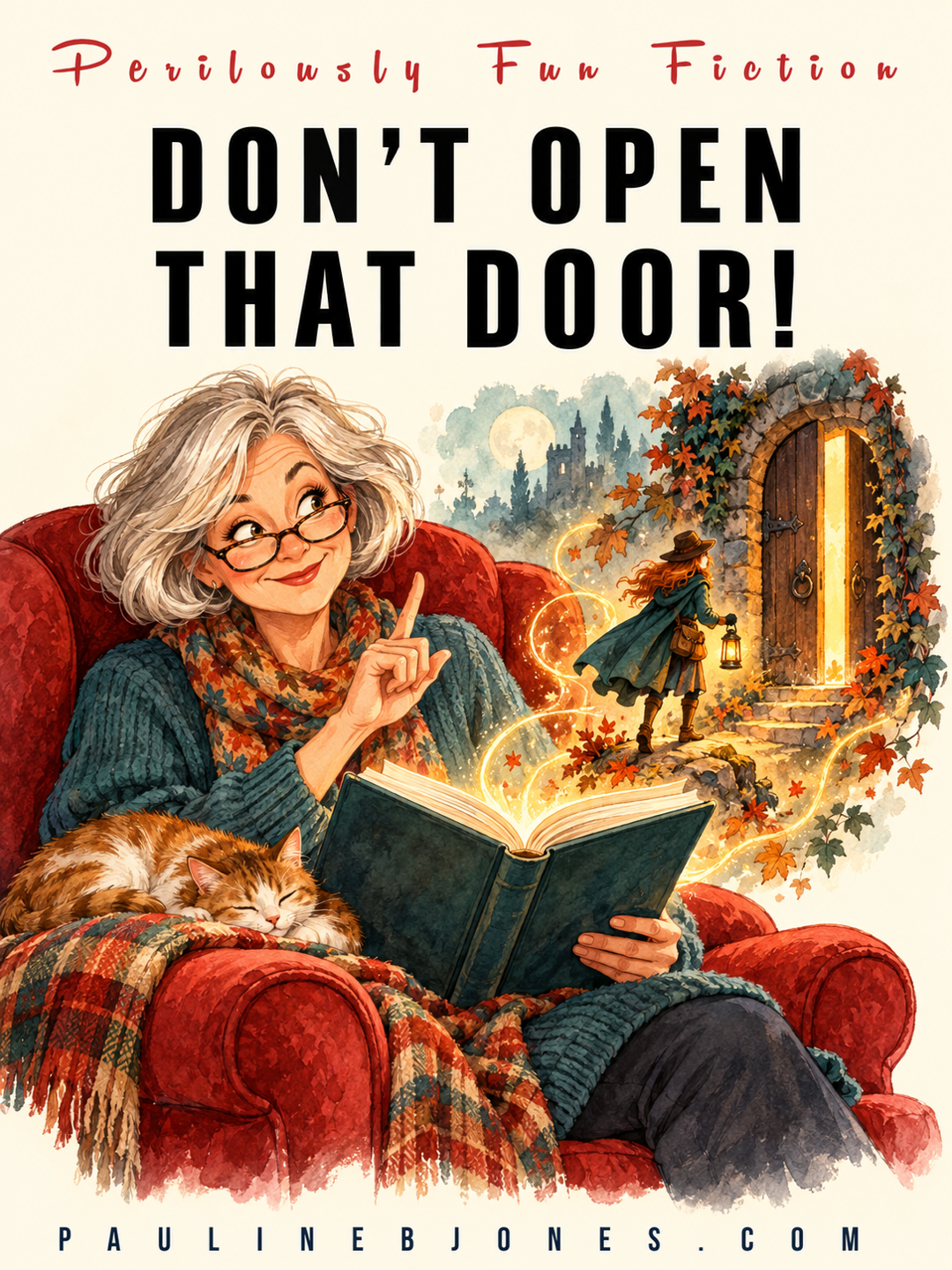
And Other Advice Fictional People Ignore
Reading is supposed to be a quiet activity.
This seems reasonable until someone in a book hears a strange noise downstairs and decides to investigate. Alone. Without turning on a light.
Suddenly, the reader has a few things to say.
“Don’t open that door.”
“Take your phone.”
“Perhaps put on actual shoes before confronting whatever is growling in the basement?”
October seems like an excellent time to discuss this problem. Fictional people are about to encounter an alarming number of creaking doors, mysterious footsteps, and invitations they would be wise to decline. They could use some guidance.
Fortunately, readers are available.
Unfortunately, nobody inside the book appears able to hear us.
We were only going to read
You open a book expecting to spend a little time with a story. Somewhere along the way, you acquire responsibilities.
The heroine needs someone to point out that the helpful stranger is asking unusually specific questions about her security system. The hero needs reminding that an injury does not become less serious because he refuses to discuss it. Somebody needs to check on the dog.
You did not apply for any of these positions. There was no interview. Yet here you are, supervising people who have access to considerably more adventure than common sense.
And the advice is so practical.
Tell someone where you’re going. Keep the evidence. Charge the phone. If the entire village falls silent when you mention the old house, perhaps ask a follow-up question before signing the lease.
It all sounds perfectly sensible from this side of the page.
Romance requires a different department
Of course, some fictional people are physically safe and still in desperate need of assistance.
They have fallen in love.
Everyone knows this except the two people directly involved, who are busy explaining why their concern for each other is strictly practical.
Naturally, he remembered how she takes her tea for practical reasons. And she noticed he looked tired because she is generally observant. There is nothing to discuss here. Move along.
The reader may have suggestions.
“Ask her.”
“Tell him.”
“Please finish this conversation before another emergency interrupts it.”
There is a particular kind of suspense in watching two otherwise capable adults approach an honest conversation. They can navigate danger, solve a mystery, and improvise an escape. Surely they can manage six sincere words in a room with adequate lighting.
Apparently, this is asking a great deal.
Still, when one of them finally risks saying what matters, all that waiting can make the moment wonderfully satisfying. We have been rooting for them through every awkward silence. We would like our efforts acknowledged, possibly at the wedding.
Our excellent advice has one small weakness
We often know things the characters don’t.
We saw the suspicious conversation three chapters ago. We know what was hidden in the drawer. We have been inside the other person’s head and can confirm that the supposedly indifferent expression required considerable effort.
The character has none of these advantages. They have a troubling situation, incomplete information, and possibly wet socks.
That does complicate decision-making.
Sometimes the choice we object to is also the choice that makes us love them. They go back because someone needs help. They open the door because a frightened voice is calling from the other side. They trust again even though the last time cost them dearly.
We can wish they had brought a flashlight and still admire their courage.
That is where the reader’s advice can soften. “Don’t go in there” becomes “Please be careful.” We understand why they have to go. We just want them to come back.
By then, we care
There is something lovely about reaching that point with a book.
A person made of words has become someone whose safety matters to us. We are concerned about their future. We want them to find the missing clue, accept the offered kindness, and stop believing they have to manage everything alone.
As a writer, I hope to give readers characters worth that concern. People with enough courage to face trouble and enough humanity to make us worry about how they will get through it. Add some humor, a little romance, and a happy ending they have worked for, and there is plenty for a reader to become involved in.
You might offer your advice silently. You might say it aloud. You might close the book for a moment and give the ceiling a meaningful look.
The characters will continue on their way, impervious to this very reasonable feedback.
And we will turn the page.
Because now we need to know whether they make it. Whether the door should have stayed closed. Whether the two people who can barely look at each other will finally admit why.
We have come too far to abandon them just because they aren’t following instructions.
But honestly. Take the flashlight.
What advice have you given a fictional character who absolutely refused to listen?
No spoilers necessary. “Put on some sensible shoes” is a complete answer.